

If you have been in the classroom any length of time you have probably noticed that this generation of young people is very visual. They like memes, YouTube, Instagram, emojis, and GIFs. I think it is important for educators to make learning not only relevant but fun. One way to do that is to let students bring those visuals that they enjoy so much into the classroom. I know that some of you might be turned off by this suggestion and make comments about how students won’t be using their emoji or GIF skills on standardized tests or in their future employment. Let me start by saying that I am not suggesting that teachers stop requiring writing, only that we try to incorporate the 🌎 of our students into the classroom.
There is a skill involved with trying to find the right visual to match an emotion; it isn’t a thoughtless act. Ask students to add pick an emoji (or series of them) that best matches their reaction to something and you might be surprised at the level of thinking that goes on. Add the concept of #BookSnaps (Two of my many #BookSnaps are below) that involves students taking a picture of a page from a book they are reading and creating a visual representation of how that passage/page makes them feel and you can get awesome products that require just as much thought, if not more, than you would get from a piece of writing. Speaking from experience, #BookSnaps have made me read differently. I can look back at #BookSnaps I have created and memories will come flooding back about what I was thinking at the time I created the image. Take a look at @TaraMartin and #BookSnaps on Twitter for more information and examples.


I am a self-admitted GIF fanatic. Ask my wife…I have carried on many conversations without so much as a typed word. You might roll your eyes, but I will tell you it would have been faster to type than it was to search for the right GIF to match the emotion I was feeling. Teach students to search Google for animated images (GIF) as a way to get across emotions that characters or historical figures might have felt. If you have ever used a Google Form (click here) as a daily check in to see how students are feeling or their reaction to something, try adding GIFs instead of words to get them to thinking differently about their thoughts. You might even get a little laugh to lighten things up
Do you Bitmoji? If not, give it a try. These personalized images can be added to emails to express all types of feelings and emotions. Not every email has to be formal! Adding your Bitmoji in your comments in a Google Doc will make your thoughts pop and not be just another comment. Creating Bitmojis for children under 13 is problematic, but older students might already have their own. Using a service like @Buncee could allow students to make their own lookalike character to use in other ways.


One important result of incorporating emojis and GIFs might be how your students view you as a person. Hopefully students will see that you are willing to dabble in their world to try to make connections to your content.
Don Sturm

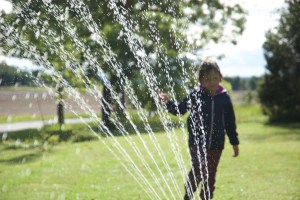 My goal moving forward is to work to be more of a sprinkler than a firehose. People will still have the opportunity to get soaked, but it will be at their pace. Watch kids who run through a sprinkler. Some go full bore through it, some stand right on top of it, some hang back to get a little wet. This last type almost always ends up getting soaked once they get used to the temperature of the water or they see others having fun playing. This will be a challenge, but I think it is important for me to make this a goal. One way that I can work on this is to make sure that I am fully listening to those who ask for my help or advice. Truly hearing what teachers have to say will help me to better sense whether they are the run through the sprinkler full bore type of person or one that needs to feel the sprinkles for a bit before they commit to run through it.
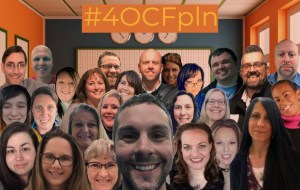
 So I am sitting here in Chicago’s Union Station waiting for the train to take me home from ISTE 2018. All I want to do is sleep, but I thought I would start the reflection process. Let me start by saying…WOW! As a first timer, ISTE was very overwhelming. Being someone who likes being in social situations and unfamiliar places, it is good for me to feel overwhelmed. It helps me to see how others view the world. I see why introverted personality types feel exhausted after being in social situations.


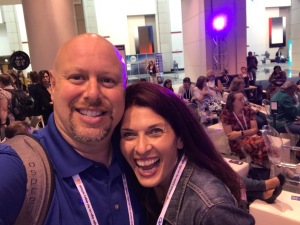

 As a first timer, OVERWHELMED is the word going through my head right now. I have been to many conferences, but ISTE is by far the biggest. There is just so much to do and not enough time or human energy to be able to do it all in the Saturday to Wednesday time frame! I have read blog posts, followed hashtags, and joined the ISTE Voxer group all in the hopes of gaining some degree of comfort before stepping foot in Chicago next Saturday. The one thing I might have going for me is the fact that I have been to Chicago many times (I only live 2 1/2 hours away) so I don’t have the added stress of trying to figure out what I need to see outside of the conference.

 It has been awhile since my last blog post, but now that the 2016-2017 school year is over it is time to think about next year. Summer is the time that teachers relax and regroup from the previous school year, but for many it is also the time to reflect on their teaching practice. I would argue that many times this is the only time when true reflection occurs. During the year we are often pulled in so many directions that is challenging to have meaningful and deep reflection. This post is meant to get you thinking about next year!



 Schools Can Be Better