Reflections on Using MirrorTalk: My 30-Day Challenge Experience

After reading Atomic Habits by James Clear, I have become laser-focused on forming new habits. As of this writing, I am on day 805 of meditating at least 10 minutes daily, 537 days of weighing myself, 220 days of flossing, and 20 days of reflecting with MirrorTalk. Specifically, the goal of this 30-day MirrorTalk challenge is simple: to show how making reflection a daily habit can deepen self-awareness and spark growth. 

While I have always been reflective, the last couple of years have solidified my belief about the importance of reflection as THE way to improve. Reflection is not just asking yourself, “What can I do better?” It’s also about thinking through questions like, “What could I do differently?” and “What do I already do well?” Reflection is a way to see how your current actions compare to past ones and determine where you can grow as a human. That’s what I love about MirrorTalk; it pushes me to think deeply and honestly.

I’ve been involved with MirrorTalk since the early days of its development. Seeing how the tool has evolved is impressive. As a result of the challenge, I have used it daily to respond to questions that make me pause and reflect. It’s almost like having a conversation with someone willing to ask tough questions. Even people you trust to offer feedback don’t always give you the whole truth because they care too much about not hurting your feelings. The way MirrorTalk uses AI to customize questions based on what you’ve said is a real game-changer. It picks up on whether your mindset is growth-oriented and nudges you to think about how to make changes moving forward.

Twenty days into the challenge, I’ve found it engaging and challenging. It’s made me reflect on everything from my role in education to what motivates me and how I connect with others. I’ve used MirrorTalk in the past but struggled to make it a habit. This challenge, though, is what made it a solid habit.

Using MirrorTalk is straightforward. I can log in on my iPhone, computer, iPad, or their dedicated Mirror device. Each session starts with a peppy welcome message and then dives into questions that elicit reflective responses. On some days of the challenge, participants respond to a set of premade questions, while on others, AI tailors questions based on my previous answers. The questions are challenging and prompt me to dig deeper and connect the dots between what I say and what I do.

Looking ahead, I’m excited to bring this tool into the education space. I’m working with our wellness coordinator who has introduced monthly challenges like step tracking or Wordle games to our staff. One of the months this year will see the addition of a similar 30-day reflection challenge. The hope is that seeing how easy the app is to use, teachers will experience the benefits of consistent reflection and want to bring it to their classroom. 

I encourage you to think about how often you reflect on your own experiences, whether professionally or personally. Do you make it a point to reflect regularly, or do you only do it when you hit a bump in the road? Meaningful reflection goes far beyond simply counting your successes and failures. It requires you to challenge your current perspective, think critically about your experiences by uncovering patterns, and make you thoughtfully consider your next steps. Reflection isn’t just about looking backward; it should use the past to intentionally shape where you are headed. 

I highly recommend giving MirrorTalk a try. It is easy to sign up at https://mirrortalk.ai/. The team behind it is incredibly passionate and ready to help you get started. Like any new habit, it might not “click” with you or your students immediately, but stick with it. You might be surprised at how impactful it can be. 

Don Sturm

The Importance of Connections

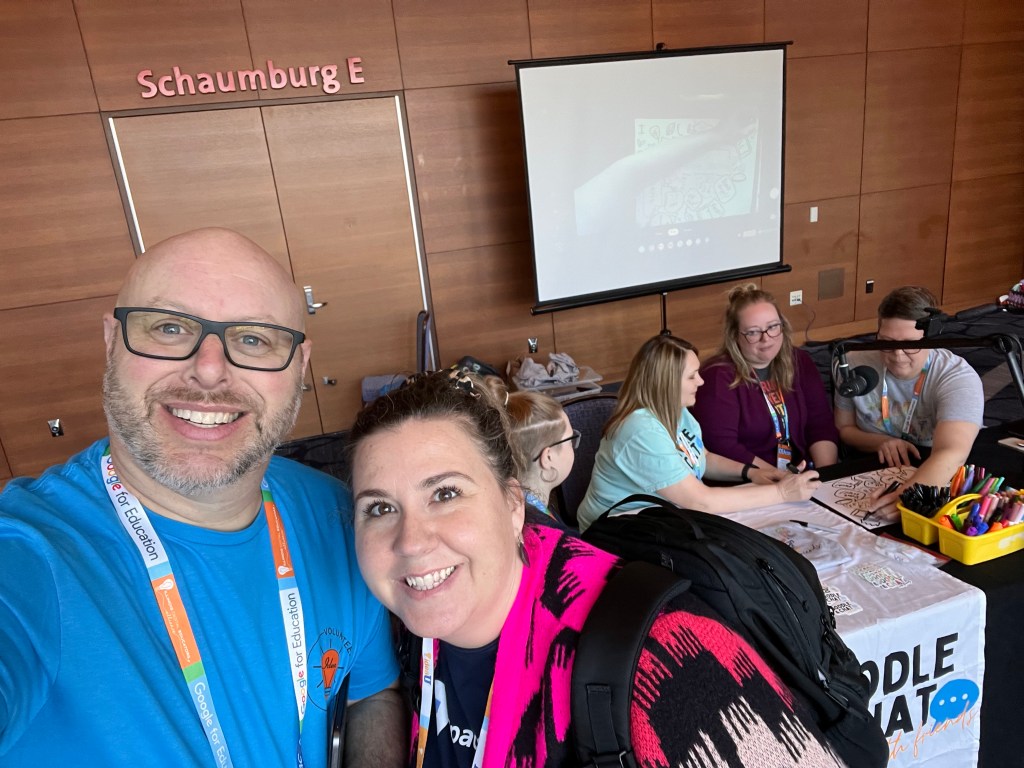
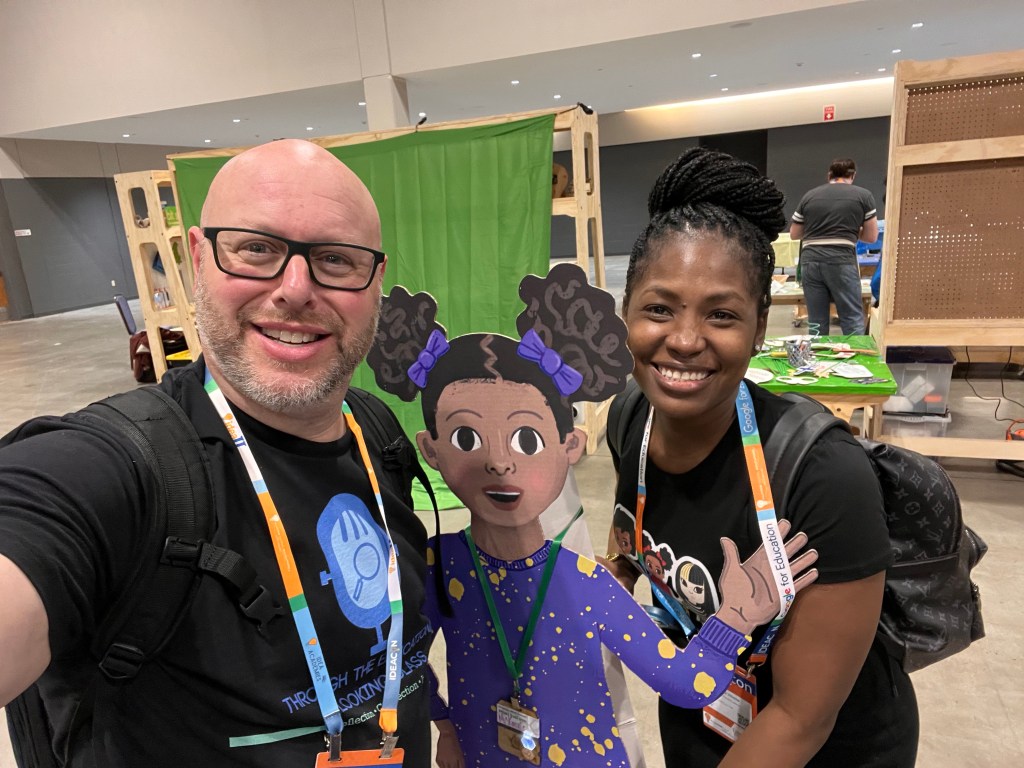
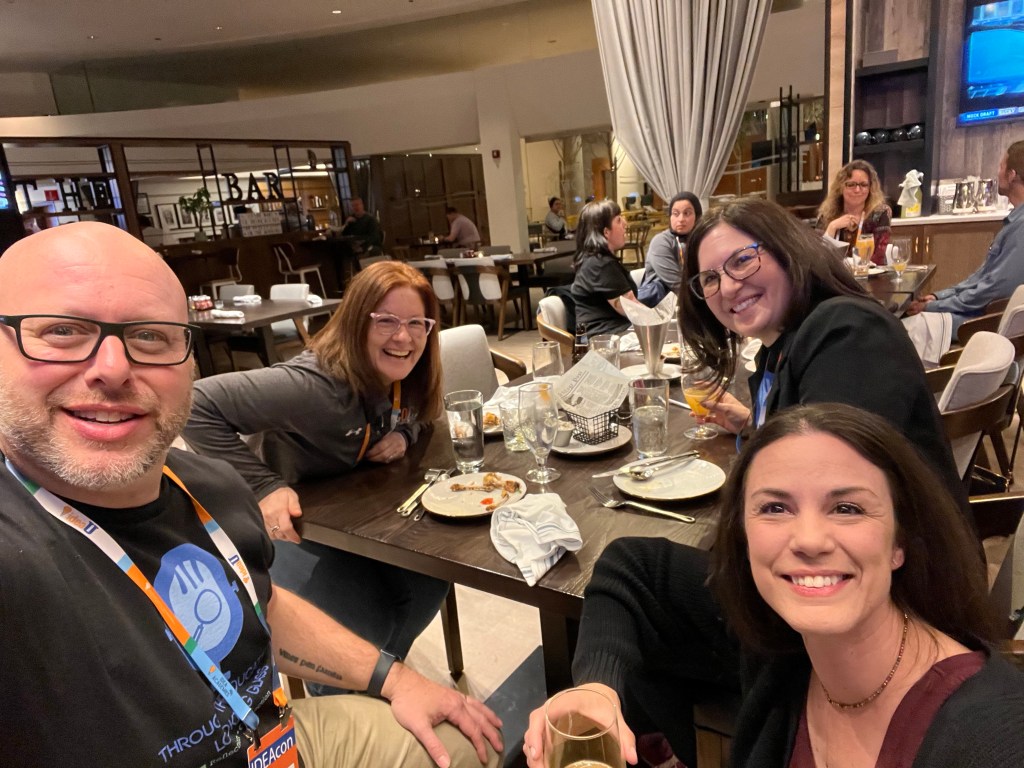
#IdeaCon is over, and I have time to sit back and think about what I gained from the conference experience. Being on the committee gave me little opportunity to sit in on presentations, but I was able to present two sessions. What is the biggest takeaway from the conference, you ask? The importance of connections. 

Yes, a plethora of great information is shared and topics discussed, but ultimately, the connections matter. Meeting up with people you don’t see very often, those you have connected with online but not in person, or those who are brand new to you matters the most to me. I get so much from just being around people who care about education. Their contagious passion makes me want to be better at what I do.  

It is easy to get into a bubble and only see the world through your lens or the lens of the people with whom you work. Connections at conferences allow you to see the world of education from other perspectives. These new perspectives can help you formulate a new path forward or help you appreciate what you have. For example, I have learned much about DEI (Diversity, Equity, and Inclusion) by talking with educators about these topics. You can read all the books you want, but talking with others gives you the first-hand experience necessary for an accurate picture to emerge. 

Connections are also a way to make and cultivate friendships. I know some think that online friendships aren’t real friendships. While I wholeheartedly disagree with this sentiment, it does help when you can continue the friendship in person. I spent so much conference time just catching up with “old” friends and working on new friendships. These are REAL relationships with people who have mutual respect for one another. We laugh, share our struggles, give advice, and sometimes cry, all of which constitute friendship. 

I’ll leave you with two thoughts…

  1. Online relationships are genuine relationships.
  2. When presented with the opportunity to attend an in-person conference, take it. Don’t just attend; take the opportunity to connect with people.

My Journey to Control My Brain

Me: Time to go to sleep.

Brain: Did I make Sue mad today? I have so much to do tomorrow. How will I get it all done? Did I close the garage door? Chickens. I hope my flight 3 months from now isn’t canceled. I need to mow the lawn. What podcast will I listen to tomorrow? Horses. Eggs. I need to make an appointment to get my tires rotated. 

*********************************************************************************************************

Does this sound familiar? 

I am writing this blog post to share with you my journey to train my brain to do what I want it to do when I want it to do it. I have always been intrigued by how the brain works, but until recently, I hadn’t been too concerned with taming it. Now I am fixated on it!

I have practiced mindfulness for a few years. Mindfulness, for me, was an at-the-moment experience. I would set aside 10-15 minutes to use my Calm subscription (I am one of the lucky educators who got a lifetime subscription for free) and work to set my mind at ease. I see now that I wasn’t practicing mindfulness outside of the sessions. I enjoyed it, but it wasn’t a part of my day-to-day life. 

Enter Erin Kiger , a member of one of my online PLNs who thought I would be interested in a new product that Swivl was working on called Skilled Space. I jumped in fully, started using the platform, and regularly connected with Sara Candela, who was working on the project for Swivl. Little did I know that this connection would change how I looked at my brain. I am always promoting making active connections using social media, and this was the perfect storm. My relationship with Sara led to my connection with the project manager Arlen Bitsky and the founder of Swivl, Brian Lamb. Long story short, Skilled Space evolved into something bigger, Focusable, and I am hooked. Simply put, these three individuals have changed my life. 

As they state on their website, “Focusable leverages neuroscience to transform learning and work into more enjoyable and productive experiences.” My experience over the last year with beta testing the product has helped me start to take more control over my ability to focus and control my brain. Focusable, combined with my experience of mindfulness, has better allowed me to recognize when my attention is being highjacked and bring myself back to the present. Manageable goals and the opportunity to reflect during the process is genuinely changing the way my brain functions.  

Sara also started hosting book studies for books like Peak Mind by Amishi Jha and Flow by Mihaly Csikszentmihalyi to help further the idea of how the brain works and how we can better understand our minds. I have since added other brain-based books to my reading list. My latest read is Digital Minimalism by Cal Newport. All this discussion and reading have helped me make critical changes in my life. It is still a work in progress, but here are some changes I have made or am working to make.

  • Mindlessly scrolling through social media- I still use it but am more conscious of when and for long I am doing it. I am considering removing social media apps from my phone. 
  • Giving myself time to let my brain run wild- I realized that I am pumping stuff into my ears all the time…driving to work, sitting at my desk, working out, etc. My current goal, work out without headphones every other time. My brain needs time to process everything I am putting in it. This blog post started on a 3-mile headphoneless walk.
  • Continue to meditate- I am currently on a 26-day streak. The streak is less important than the skills I am learning. I find myself employing the skills in the guided sessions to the outside world. I focus on my breathing many times throughout the day.
  • To be happy, I need challenges- I now look at relaxation differently than I used to. I have started to think about productive leisure time and am exploring new “hobbies” that provide my brain with a challenge. Your brain needs stimulation and challenge to grow. 
  • Sharing these ideas with others- I am not keeping this all to myself. I have shared Focusable with a friend at work, El Higus, and she has become passionate about it. We plan to talk to district-level leaders about using Focusable with staff and students. 

I am sure this list will get longer as I continue exploring more brain science. For now, I love the idea that I can change my brain for the better. As the folks at Focusbale say, “You are focusable.” 

Don Sturm

Complex Problems Require Complex Solutions

I have become fixated on the phrase, “complex problems require complex solutions.” It has become my mantra. Many in our society have difficulty recognizing that the world is not a simple system. In turn, this binary thinking and looking for simple answers create our current dysfunctional state of being. 

For those who do not know me, I used to be this type of thinker. Why are people poor? To me, it was apparent, they didn’t work hard, or they were lazy. I realize now that my whole worldview was one of simple right or wrong. My thinking changed about a decade ago for reasons that require much more elaboration than I have space for in this blog post. I now focus my thoughts on trying to figure out all of the complexities of a given problem. I could stop there and say, “thanks for reading,” but it was a conversation with a friend and colleague that has me refining my view of this idea of needing complex solutions. 

I work with Jaclyn Hoskins (@JaclynSmith21), and many of our interactions take place through Voxer. She is a reflective educator, and she makes me think. People who make me think cause me to reflect on my own beliefs and attitudes. We all need these people in our lives. Last week, we discussed a recent education Facebook post. Jaclyn commented that the problem with the phrase (complex problems require complex solutions) is that it might make some people feel that there are issues that are too hard to solve and, in the end, might make people throw their hands up and surrender. I started to wonder if I was doing more harm than good by focusing on this mantra. 

I continue to wholeheartedly believe that problems are complex, and they do require complex solutions, but here is my new thinking. We need to make the complexities visible by breaking them apart before seeking solutions. Offered solutions need to be broken down into manageable tasks to make changes that will positively impact the big problem. 

How can we do this? For starters, we have to have some common agreement as to the nature of the problem. This requires that we talk with others about how they see the problem. We can’t be quick to jump to solutions until we understand the true nature and the impact of the problem. My matra assumes that everyone understands that issues are complex, which is a big assumption to make. Jacyln was getting me to rethink the emphasis that I was placing on the solution rather than the problem. Once you have an “agreement” on the issue, people can devise solutions that focus on the unique complexities. These individual solutions would then work in tandem to solve the overall big problem. Several smaller solutions seem much more manageable than one big complex solution. The goal is to solve that difficult problem, not overwhelm people into thinking that they can’t do anything about it because it is too complicated to grasp. 

The million-dollar question is how we get people to see the problem as complex. The current division of our society makes this recognition of complexity difficult. Still, we have to continue engaging and encouraging people to dig deeper into the problems we are facing. Arrived at solutions will not be successful unless we truly know the nature of the problem. The best way to recognize this complexity is to get out of your bubble. Identifying and acknowledging complexity requires us to see the world from a variety of perspectives. I fight against this parochialism by following a variety of educators on Twitter and reading as much as possible.

This blog post was hard to write, and I am still not sure that I clearly outlined my thinking, but it has helped me solidify my new focus of understanding the complexity of the problem before coming up with solutions. Maybe my new mantra needs to be, “Effective solutions are only possible by understanding the complexity of problems.”

Don Sturm

Let’s Connect!

Voxer- @dsturm823

KathiSue Summers and the Case for Robust Online Communities

It has been a long time since I sat down to write a blog post. I could give a million excuses, but frankly, I just haven’t felt like writing one. The death of a friend has prompted me to write a new post. KathiSue Summers passed away from COVID on Saturday, August 28. It was heartbreaking news for everyone who knew and loved her. I never had the chance to meet her IRL (in real life). Wait… you never met her? How could her death have an impact on you? The answer is in the relationship we had built as members of an online PLN community through Voxer. Voxer is a platform that allows for voice and text communication. This community has been together for roughly four years, and we connect daily about topics ranging from education, our kids, favorite foods, etc. I know many of these people better than I know some teachers I have worked with for 30 years. We have had some great times and some rough times. We don’t always agree. Sometimes I get angry at them, and I am sure the reverse is true. Ok…I know the reverse is true. But, in the end, we are a community that cares for each other. 

Some colleagues I work with “make fun” (in a joking sort of way) of these connections, but they are real friendships. My charge to you is to find your group and start connecting. How do you get started? Make your Twitter connections more than just a Twitter relationship. Take the leap and invite followers to join an app that allows you to share your thoughts using your voice. Voice brings so much more to the table than texts. You can hear passion, excitement, and sadness through voice. While Voxer is the app that #4OCFpln uses, others like Synth and Skilled Space allow for the same types of interactions. I have recently become friends with Sara Candela. We use both of these apps to stay in touch. Sara lives 2,000 miles from me; we have never met IRL, but I consider her a friend. 

Even though I never met KathiSue Summers IRL, I am thankful for the online community that allowed me to get to know KathiSue and feel the loss over her death. 

Don Sturm

Let’s Connect!

Voxer- @dsturm823

GoSynth

The Domino Effect

Screen Shot 2019-07-16 at 12.53.46 PM

I know that I can be persistent. Some might even call me annoying. My goal over the last five years as a Technology Integration Specialist has been to get educators out of their bubble by making contact with educators outside of the city/state/region where they teach. While some educators took me up on my offer to help them connect, most of the times my pushing was met with quite a bit of resistance.

“I don’t have time for it.”

“How do I know the people I make contact with are good teachers?”

“Social media is stupid.”

“What I have been doing has worked so far.”

Thankfully, I have continued to be persistent/annoying because this year has been different. More teachers and administrators in my district have been taking to Twitter and Voxer to get outside of their bubble. I beam with pride (sort of like a proud poppa) when I see these new interactions on a variety of social media platforms. Consider these examples…

  • The 7th-grade math teacher who wants to flip his classroom began Voxing with the author of Tech with Heart, Stacey Roshan (@buddyxo) about her nine years of experience with flipping her math classes. There are no other “experts” on flipping a math classroom in my district, so Stacey has provided reflective, just-in-time answers to his questions. I sense his increased confidence level with every interaction.
  • The 3rd-grade teacher, Kelley Friedrich (@KelleyFriedric1), who wants to change up what and how she does things is getting involved in Twitter and making connections in order to learn more about topics like #geniushour. Kelley also wondered if there was a better way than charts and points to handle discipline in the classroom. I helped her make connections with Elizabeth Merce (@EMercedLearning), founder of #DitchtheClips, to discuss her experiences and expertise in social-emotional learning (#SEL) with early primary students. These conversations have taken place on Twitter and Voxer.
  • The high school social studies teacher, Jaclyn Smith (@JaclynSmith21), who wants to rework her classes to better meet the needs of her students is jumping into Twitter and Voxer to make connections with others who are on the same journey. I have had more contact with her on Voxer and Twitter this summer than I was able to have most of the last school year! That goes to show you that social media can connect people who aren’t all that far apart.
  • The elementary administrator, Michelle Peterson (@mbpeterson719), who was on Twitter but didn’t do much with it (she didn’t even have a profile picture) is now becoming an active contributor. She has also jumped into Voxer to have discussions with Jacyln Smith about the recent Strobel Summit sessions (@strobeled, #StrobelSummit). Imagine that…a high school teacher and elementary administrator having a discussion about teaching and learning!
  • The high school counselor( now elementary principal), Stephanie Brown (@brownfamoffive), who has gone from an inactive to active Twitter contributor also made the leap to Voxer. She is now an actively contributing member of the #4OCFpln on Voxer. This group has been a game-changer for me professionally! She jumped right into the new platform and is not only active in that group but brings her #SEL and trauma-informed instruction expertise to the group members. She even joined forces with two other #4OCFpln members (@jchandlerteach and @jmartinez727) to offer a Voxer book study on The Boy Who was Raised as a Dog.
  • The kindergarten teacher, Haley Veldhuizen (@HaleyVeldhuizen) who is new to Twitter but is jumping in with both feet! She has used this new medium to share her learning as well as finding resources for incorporating Seesaw (@Seesaw) into her classroom next school year. I can only imagine how she will use Twitter to share out about her class next school year!

Social media may have its faults, but it can and is used for good. If you are reading this and don’t consider yourself very connected, find something for which you are passionate and connect with others who share that same passion. If you are a connected educator, reach out to others (be persistent/annoying) and help them experience the power that connecting with others through social media can have on your classroom, students, and you as a professional. This is the domino effect…you push others, they get involved, and they push others to do the same. The end result is the positive impact that all of these professional connections will have on students!

Don Sturm

@sturmdon on Twitter

@dsturm823 on Voxer

I Like…

I like

My #OneWord2019 is dissonance. That word is especially important to me because I think we all could do more to delve deeper into what we believe and whether those beliefs transfer into our actions. The act of self-reflection is vital to becoming a better educator. Let’s take a look for a moment at a simple and often used statement…”I like.”

I like pizza.

I like to vacation in Hawaii.

I like dogs.

I like…

You get the point. However, let’s think about what that phrase means when used in our classrooms and schools.

I like the feel of the paper in a real book.

I like to use a pencil/pen and paper.

I like a classroom that is quiet and organized.

Here is where I may make some educators uncomfortable (maybe even angry). When educators make these types of statements, they are really verbalizing their likes, not the likes of their students. There is nothing wrong with stating your likes and how you learn best, but the danger is when your preferences are mistaken to be the preferences of others.

I think what is important is to give learners, no matter their age, some variety in how learning can take place. Let them find their preferences through a variety of activities and experiences. I am someone who reads almost exclusively on an electronic device. For me, it is much easier to have reading material always at my fingertips. I don’t need to have access to a pen or highlighter with which to mark essential passages and ideas. Often overlooked is the fact that I don’t carry a purse; there is no place to carry a book and pen! I can read at night without the awkwardness of finding the right lighting. I read more than ever because of the ease at which I can access the printed word. When I have mentioned my preference to teachers, many respond by saying that they could never do that and that kids need to touch and feel the pages. I have no problem with the personal preference they express; my issue is with assuming that kids have that same preference and need to handle paper to make reading a meaningful task.

My challenge to you is simple. Try to be more aware of how your personal preferences impact your classroom. Give students the ability to experiment with different modalities. Let them find out what they are comfortable with and will help them learn best. Try to resist forcing your way of learning onto them.

Don Sturm

Personalized Hashtags

sld-1 (24)

In my position, I spend a lot of time trying to convince educators to get connected by using Twitter and/or other social media platforms. Most of the time I tout the connections that can be made and how those newly formed connections can help to transform classrooms and schools. This blog post isn’t about all of those critical reasons but how to use hashtags as a way to document and retrieve what you are doing in the classroom.  I recently attended an EdCamp in Central Illinois and was in a session discussing the need for and importance of connecting with others on social media. I didn’t need to be convinced, but when I mentioned the beauty of a service called Wakelet in being able to gather Tweets to help others see the power of connections, the light bulb starting going off. Simply put, Wakelet is a curation tool that allows you to add PDFs, links, images, Youtube videos, and Tweets all in a visually striking way. Here is an example of a Wakelet I made to show others the benefits of Seesaw. I started thinking about how teachers could leverage the power of hashtags to demonstrate their professional growth. I also need to give some credit to Carrie Bauchcum for helping me think through my ideas.

Hashtags are a way of categorizing information on social media sites like Twitter. While some users craft hashtags that are funny and sometimes only for one time use, consistent hashtags are a powerful way of being able to find information. Going to Twitter and searching #GrowthMindset will provide you with a plethora of information about the topic. Results might include GIFs, blog posts, images, etc. and can serve as a starting point for an exploration into this topic. My thought…what if we used personalized hashtags (#personalizedHT) to share information that we want to show others about what we are doing in our classroom and/or school?

IMG_8861

There is probably a familiarity with the Danielson Framework as many districts use this model for teacher evaluations. Teachers are asked to provide specific evidence under each of the domains to help evaluators rate their overall efficacy. I think it is a common practice to leave this evidence gathering process to the last moment and then frantically try to gather what is needed for the summative evaluation. Imagine for a moment teachers working throughout the year to capture this evidence and sharing out the story of their classroom and pedagogy using Twitter. Each post could have a school hashtag as well as a personalized hashtag (#PersonalizedHT). I might post an image of a group of students effectively using the flexible seating in my room. Adding a hashtag like #sturm2e would record this as a piece of evidence for Domain 2e- Organizing Physical Space. This process would continue throughout the year and might include personal reflections, uploaded videos, self-reflections posts using an app like Periscope. The important part is that each Tweet is “coded” with at least one domain based on a specific personalized hashtag. Just a quick note on hashtags–No one owns them so if you come up with something really catchy, others can use it. Bland and boring might be a good rule of thumb for these hashtags.

Enter Wakelet. I love it because you can link your Twitter account to the service and pull in Tweets by account or hashtag. The person viewing the shared Wakelet does not have to have a Twitter account to be able to see the Tweets you have added. You see where I am going with this?? Create a Wakelet for each domain and every week or so (Twitter only allows Tweets to be searched 2 weeks back on Wakelet, though you can search for and add individual Tweets at any time while in Twitter) and do a search for the hashtags that corresponds to the relevant domain. This evidence is not limited to Tweets. You can add other items to the Wakelet to help present an accurate, real-world portrayal of you as a professional.  Each Wakelet can be shared using a link with anyone needing to see the information.

I am excited to start using #PersonalizedHTs to document my learning and growth as an educator. How do you see them being used for yourself?

Don Sturm (@sturmdon)

The Complete Guide to Twitter Hashtags

Wakelet: A how-to guide for the skeptical educator

The Educator’s Guide to Wakelet