One Word 2025

A minimalist compass design with sharp, symmetrical points radiating outward, and the word "EXPLORE" boldly written across the center in a casual, hand-lettered font.

For the past eight years, I’ve chosen one word to guide my year. It’s become a tradition that feels more personal and meaningful than making resolutions. Resolutions tend to focus on fixing one specific thing, like exercising more, saving money, or cutting back on screen time. But life doesn’t really work like that. It isn’t lived in neat little boxes. Choosing one word feels more encompassing than that. It shapes how I approach everything, from how I make decisions to how I handle challenges. It becomes a kind of theme for the year, one that seeps into all parts of my life.

This year, my word is EXPLORE. I’ve been thinking a lot about how it connects to a word I chose in the past, curiosity. That year, curiosity was all about asking questions, learning, and wondering. It was about unlocking doors and discovering what was behind them. EXPLORE feels like the next step. It’s about taking action, actually stepping through those doors and experiencing what’s on the other side. If curiosity is the spark, EXPLORE is the movement. It’s about diving in, saying yes, and being open to where that takes me.

One of the things I love about choosing a word over a resolution is how much simpler it is to remember and carry with me. A resolution can feel overwhelming, like this big thing hanging over your head that you either succeed or fail at. But a word is simpler. It sticks with you. It’s always there in the back of your mind, guiding you in small ways even when you aren’t thinking about it. EXPLORE can show up anywhere in how I spend my time, the choices I make, or even the way I approach the familiar. It doesn’t have to be big or flashy. It can be as simple as trying a new route to work or reading a book outside my usual genres.

Over the years, this practice of choosing one word has become more than just a yearly tradition. It’s a way of looking at life. Resolutions often feel like they’re about fixing something, while one word feels like it’s about growth. It’s not about ticking off a list of goals. It’s about seeing life through the lens of the chosen word and letting it shape how I move through the world.

This year, I’m excited to see where EXPLORE takes me. What will I learn? What new experiences will I have? What parts of myself might I discover? One little word can seem small, but its power is in how it guides everything you do. So, here’s to a year of exploration.

What’s your word this year?

Don

Reflections on Using MirrorTalk: My 30-Day Challenge Experience

After reading Atomic Habits by James Clear, I have become laser-focused on forming new habits. As of this writing, I am on day 805 of meditating at least 10 minutes daily, 537 days of weighing myself, 220 days of flossing, and 20 days of reflecting with MirrorTalk. Specifically, the goal of this 30-day MirrorTalk challenge is simple: to show how making reflection a daily habit can deepen self-awareness and spark growth. 

While I have always been reflective, the last couple of years have solidified my belief about the importance of reflection as THE way to improve. Reflection is not just asking yourself, “What can I do better?” It’s also about thinking through questions like, “What could I do differently?” and “What do I already do well?” Reflection is a way to see how your current actions compare to past ones and determine where you can grow as a human. That’s what I love about MirrorTalk; it pushes me to think deeply and honestly.

I’ve been involved with MirrorTalk since the early days of its development. Seeing how the tool has evolved is impressive. As a result of the challenge, I have used it daily to respond to questions that make me pause and reflect. It’s almost like having a conversation with someone willing to ask tough questions. Even people you trust to offer feedback don’t always give you the whole truth because they care too much about not hurting your feelings. The way MirrorTalk uses AI to customize questions based on what you’ve said is a real game-changer. It picks up on whether your mindset is growth-oriented and nudges you to think about how to make changes moving forward.

Twenty days into the challenge, I’ve found it engaging and challenging. It’s made me reflect on everything from my role in education to what motivates me and how I connect with others. I’ve used MirrorTalk in the past but struggled to make it a habit. This challenge, though, is what made it a solid habit.

Using MirrorTalk is straightforward. I can log in on my iPhone, computer, iPad, or their dedicated Mirror device. Each session starts with a peppy welcome message and then dives into questions that elicit reflective responses. On some days of the challenge, participants respond to a set of premade questions, while on others, AI tailors questions based on my previous answers. The questions are challenging and prompt me to dig deeper and connect the dots between what I say and what I do.

Looking ahead, I’m excited to bring this tool into the education space. I’m working with our wellness coordinator who has introduced monthly challenges like step tracking or Wordle games to our staff. One of the months this year will see the addition of a similar 30-day reflection challenge. The hope is that seeing how easy the app is to use, teachers will experience the benefits of consistent reflection and want to bring it to their classroom. 

I encourage you to think about how often you reflect on your own experiences, whether professionally or personally. Do you make it a point to reflect regularly, or do you only do it when you hit a bump in the road? Meaningful reflection goes far beyond simply counting your successes and failures. It requires you to challenge your current perspective, think critically about your experiences by uncovering patterns, and make you thoughtfully consider your next steps. Reflection isn’t just about looking backward; it should use the past to intentionally shape where you are headed. 

I highly recommend giving MirrorTalk a try. It is easy to sign up at https://mirrortalk.ai/. The team behind it is incredibly passionate and ready to help you get started. Like any new habit, it might not “click” with you or your students immediately, but stick with it. You might be surprised at how impactful it can be. 

Don Sturm

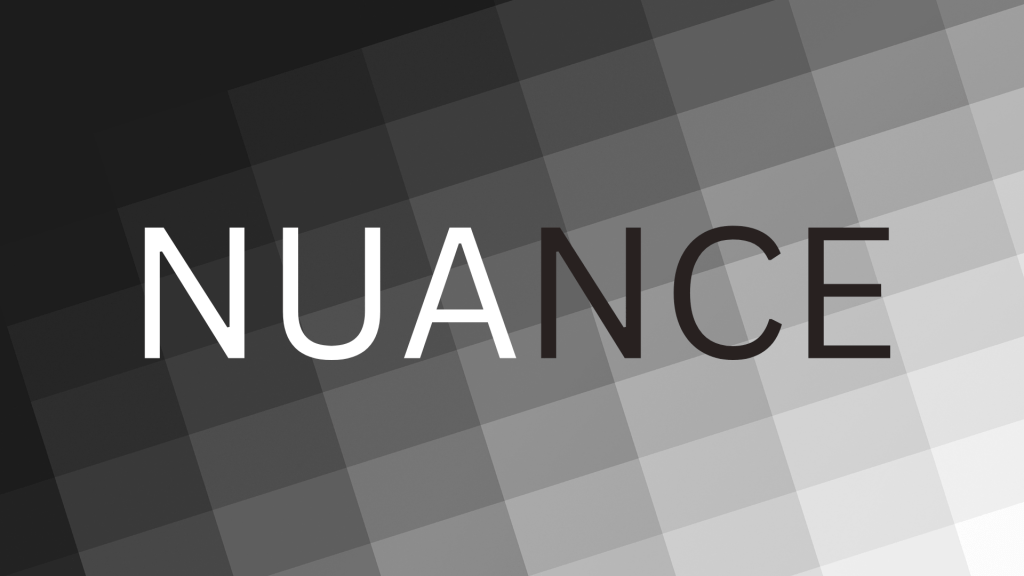
The Importance of Nuance

Simply put, society has a problem with the concept of nuance. It is common to read/hear definitive statements about causes and solutions to our problems. Education is no different. With a focus on standardized testing and measurable outcomes, the complexity of teaching and learning has been oversimplified. The field of education is complex and multifaceted, involving the study of how people learn, the methods used to teach them, and the many social, cultural, and economic factors that can impact the learning process. In such a complex and varied field, nuance is of the utmost importance.

Nuance refers to the subtle differences and complexities that exist within a topic or issue. It is the recognition that multiple perspectives, varying degrees of influence, and shades of gray often need to be understood and accounted for to develop a more accurate and comprehensive understanding of a given topic. In education, nuance is essential because it allows for a more precise and nuanced understanding of the challenges and opportunities that arise in the field.

One area in which nuance is essential in education is in the study of learning and teaching methods. There is no one-size-fits-all approach to teaching and learning, and different ways may work better for diverse learners or in different contexts. For example, while some students may thrive in a lecture-based format, others may learn better through hands-on or experiential learning. By recognizing the nuances of learning and teaching methods, educators can develop more effective and inclusive approaches that meet the needs of diverse learners.

Another area where nuance is crucial in education is the analysis of social and cultural factors that impact learning. A wide variety of social and cultural factors can influence the learning process, including race, ethnicity, socioeconomic status, and gender. With a nuanced understanding of these factors and how they intersect, educators can work to fully understand the unique challenges and opportunities that students face in different contexts.

For example, studies have shown that low-income and minority students are more likely to attend underfunded schools, which can result in lower-quality education and fewer opportunities for academic and personal growth. With a nuanced understanding of how socioeconomic factors can impact educational opportunities, educators can work to develop effective strategies for supporting these students and ensuring that they have access to the same high-quality education as their more privileged peers.

Nuance is also crucial in the development of educational policies and practices. These policies and practices can significantly impact students’ educational opportunities and outcomes, and they must be developed with a nuanced understanding of the factors that influence the learning process. For example, policies that focus solely on standardized testing and strict curricular requirements may not account for the unique needs and strengths of individual learners and may not provide a comprehensive or accurate picture of student achievement.

On the other hand, policies that are too focused on individualized approaches may not provide the structure and consistency that some students need to succeed. Educators and policymakers can create more effective and inclusive systems that support all students’ academic and personal growth by developing policies and practices with a nuanced understanding of the factors that impact the learning process.

Nuance is of critical importance in the field of education. In a field as complex as education, understanding the many factors that impact the learning process is essential for developing effective policies and practices that support all students’ academic and personal growth. By recognizing the many shades of gray within education, educators and policymakers can develop more effective and inclusive strategies that meet the needs of a diverse range of learners and that help to ensure that all students have access to the high-quality education they need to succeed.

The Importance of Connections

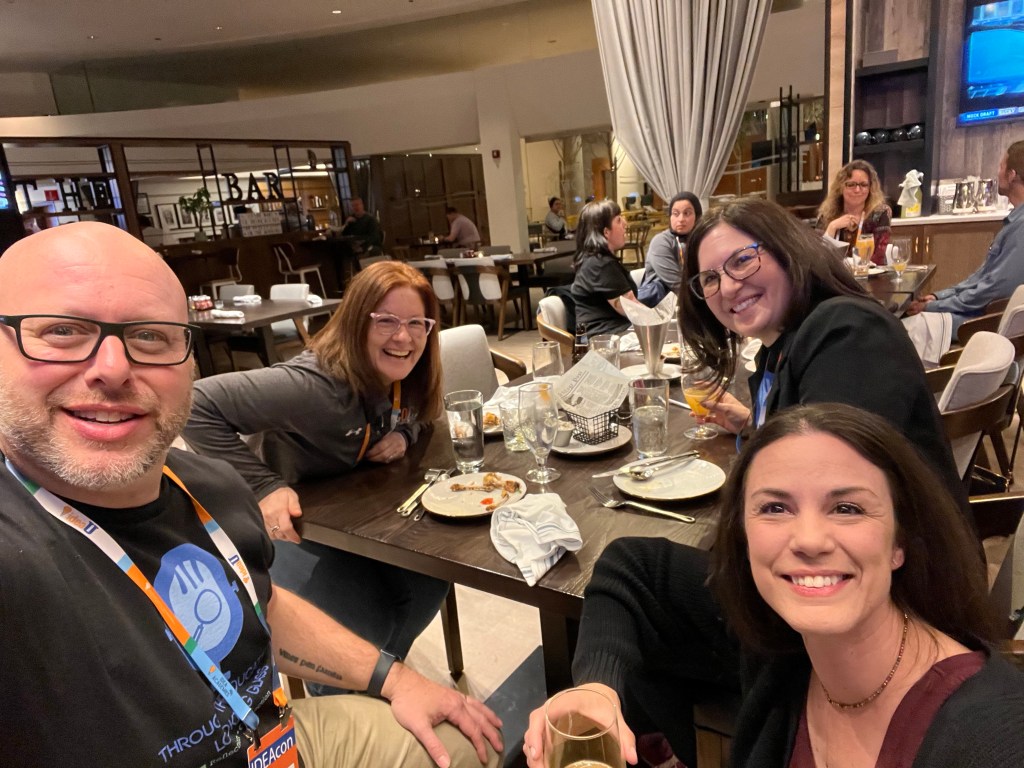
#IdeaCon is over, and I have time to sit back and think about what I gained from the conference experience. Being on the committee gave me little opportunity to sit in on presentations, but I was able to present two sessions. What is the biggest takeaway from the conference, you ask? The importance of connections. 

Yes, a plethora of great information is shared and topics discussed, but ultimately, the connections matter. Meeting up with people you don’t see very often, those you have connected with online but not in person, or those who are brand new to you matters the most to me. I get so much from just being around people who care about education. Their contagious passion makes me want to be better at what I do.  

It is easy to get into a bubble and only see the world through your lens or the lens of the people with whom you work. Connections at conferences allow you to see the world of education from other perspectives. These new perspectives can help you formulate a new path forward or help you appreciate what you have. For example, I have learned much about DEI (Diversity, Equity, and Inclusion) by talking with educators about these topics. You can read all the books you want, but talking with others gives you the first-hand experience necessary for an accurate picture to emerge. 

Connections are also a way to make and cultivate friendships. I know some think that online friendships aren’t real friendships. While I wholeheartedly disagree with this sentiment, it does help when you can continue the friendship in person. I spent so much conference time just catching up with “old” friends and working on new friendships. These are REAL relationships with people who have mutual respect for one another. We laugh, share our struggles, give advice, and sometimes cry, all of which constitute friendship. 

I’ll leave you with two thoughts…

  1. Online relationships are genuine relationships.
  2. When presented with the opportunity to attend an in-person conference, take it. Don’t just attend; take the opportunity to connect with people.

My Journey to Control My Brain

Me: Time to go to sleep.

Brain: Did I make Sue mad today? I have so much to do tomorrow. How will I get it all done? Did I close the garage door? Chickens. I hope my flight 3 months from now isn’t canceled. I need to mow the lawn. What podcast will I listen to tomorrow? Horses. Eggs. I need to make an appointment to get my tires rotated. 

*********************************************************************************************************

Does this sound familiar? 

I am writing this blog post to share with you my journey to train my brain to do what I want it to do when I want it to do it. I have always been intrigued by how the brain works, but until recently, I hadn’t been too concerned with taming it. Now I am fixated on it!

I have practiced mindfulness for a few years. Mindfulness, for me, was an at-the-moment experience. I would set aside 10-15 minutes to use my Calm subscription (I am one of the lucky educators who got a lifetime subscription for free) and work to set my mind at ease. I see now that I wasn’t practicing mindfulness outside of the sessions. I enjoyed it, but it wasn’t a part of my day-to-day life. 

Enter Erin Kiger , a member of one of my online PLNs who thought I would be interested in a new product that Swivl was working on called Skilled Space. I jumped in fully, started using the platform, and regularly connected with Sara Candela, who was working on the project for Swivl. Little did I know that this connection would change how I looked at my brain. I am always promoting making active connections using social media, and this was the perfect storm. My relationship with Sara led to my connection with the project manager Arlen Bitsky and the founder of Swivl, Brian Lamb. Long story short, Skilled Space evolved into something bigger, Focusable, and I am hooked. Simply put, these three individuals have changed my life. 

As they state on their website, “Focusable leverages neuroscience to transform learning and work into more enjoyable and productive experiences.” My experience over the last year with beta testing the product has helped me start to take more control over my ability to focus and control my brain. Focusable, combined with my experience of mindfulness, has better allowed me to recognize when my attention is being highjacked and bring myself back to the present. Manageable goals and the opportunity to reflect during the process is genuinely changing the way my brain functions.  

Sara also started hosting book studies for books like Peak Mind by Amishi Jha and Flow by Mihaly Csikszentmihalyi to help further the idea of how the brain works and how we can better understand our minds. I have since added other brain-based books to my reading list. My latest read is Digital Minimalism by Cal Newport. All this discussion and reading have helped me make critical changes in my life. It is still a work in progress, but here are some changes I have made or am working to make.

  • Mindlessly scrolling through social media- I still use it but am more conscious of when and for long I am doing it. I am considering removing social media apps from my phone. 
  • Giving myself time to let my brain run wild- I realized that I am pumping stuff into my ears all the time…driving to work, sitting at my desk, working out, etc. My current goal, work out without headphones every other time. My brain needs time to process everything I am putting in it. This blog post started on a 3-mile headphoneless walk.
  • Continue to meditate- I am currently on a 26-day streak. The streak is less important than the skills I am learning. I find myself employing the skills in the guided sessions to the outside world. I focus on my breathing many times throughout the day.
  • To be happy, I need challenges- I now look at relaxation differently than I used to. I have started to think about productive leisure time and am exploring new “hobbies” that provide my brain with a challenge. Your brain needs stimulation and challenge to grow. 
  • Sharing these ideas with others- I am not keeping this all to myself. I have shared Focusable with a friend at work, El Higus, and she has become passionate about it. We plan to talk to district-level leaders about using Focusable with staff and students. 

I am sure this list will get longer as I continue exploring more brain science. For now, I love the idea that I can change my brain for the better. As the folks at Focusbale say, “You are focusable.” 

Don Sturm

Complex Problems Require Complex Solutions

I have become fixated on the phrase, “complex problems require complex solutions.” It has become my mantra. Many in our society have difficulty recognizing that the world is not a simple system. In turn, this binary thinking and looking for simple answers create our current dysfunctional state of being. 

For those who do not know me, I used to be this type of thinker. Why are people poor? To me, it was apparent, they didn’t work hard, or they were lazy. I realize now that my whole worldview was one of simple right or wrong. My thinking changed about a decade ago for reasons that require much more elaboration than I have space for in this blog post. I now focus my thoughts on trying to figure out all of the complexities of a given problem. I could stop there and say, “thanks for reading,” but it was a conversation with a friend and colleague that has me refining my view of this idea of needing complex solutions. 

I work with Jaclyn Hoskins (@JaclynSmith21), and many of our interactions take place through Voxer. She is a reflective educator, and she makes me think. People who make me think cause me to reflect on my own beliefs and attitudes. We all need these people in our lives. Last week, we discussed a recent education Facebook post. Jaclyn commented that the problem with the phrase (complex problems require complex solutions) is that it might make some people feel that there are issues that are too hard to solve and, in the end, might make people throw their hands up and surrender. I started to wonder if I was doing more harm than good by focusing on this mantra. 

I continue to wholeheartedly believe that problems are complex, and they do require complex solutions, but here is my new thinking. We need to make the complexities visible by breaking them apart before seeking solutions. Offered solutions need to be broken down into manageable tasks to make changes that will positively impact the big problem. 

How can we do this? For starters, we have to have some common agreement as to the nature of the problem. This requires that we talk with others about how they see the problem. We can’t be quick to jump to solutions until we understand the true nature and the impact of the problem. My matra assumes that everyone understands that issues are complex, which is a big assumption to make. Jacyln was getting me to rethink the emphasis that I was placing on the solution rather than the problem. Once you have an “agreement” on the issue, people can devise solutions that focus on the unique complexities. These individual solutions would then work in tandem to solve the overall big problem. Several smaller solutions seem much more manageable than one big complex solution. The goal is to solve that difficult problem, not overwhelm people into thinking that they can’t do anything about it because it is too complicated to grasp. 

The million-dollar question is how we get people to see the problem as complex. The current division of our society makes this recognition of complexity difficult. Still, we have to continue engaging and encouraging people to dig deeper into the problems we are facing. Arrived at solutions will not be successful unless we truly know the nature of the problem. The best way to recognize this complexity is to get out of your bubble. Identifying and acknowledging complexity requires us to see the world from a variety of perspectives. I fight against this parochialism by following a variety of educators on Twitter and reading as much as possible.

This blog post was hard to write, and I am still not sure that I clearly outlined my thinking, but it has helped me solidify my new focus of understanding the complexity of the problem before coming up with solutions. Maybe my new mantra needs to be, “Effective solutions are only possible by understanding the complexity of problems.”

Don Sturm

Let’s Connect!

Voxer- @dsturm823

KathiSue Summers and the Case for Robust Online Communities

It has been a long time since I sat down to write a blog post. I could give a million excuses, but frankly, I just haven’t felt like writing one. The death of a friend has prompted me to write a new post. KathiSue Summers passed away from COVID on Saturday, August 28. It was heartbreaking news for everyone who knew and loved her. I never had the chance to meet her IRL (in real life). Wait… you never met her? How could her death have an impact on you? The answer is in the relationship we had built as members of an online PLN community through Voxer. Voxer is a platform that allows for voice and text communication. This community has been together for roughly four years, and we connect daily about topics ranging from education, our kids, favorite foods, etc. I know many of these people better than I know some teachers I have worked with for 30 years. We have had some great times and some rough times. We don’t always agree. Sometimes I get angry at them, and I am sure the reverse is true. Ok…I know the reverse is true. But, in the end, we are a community that cares for each other. 

Some colleagues I work with “make fun” (in a joking sort of way) of these connections, but they are real friendships. My charge to you is to find your group and start connecting. How do you get started? Make your Twitter connections more than just a Twitter relationship. Take the leap and invite followers to join an app that allows you to share your thoughts using your voice. Voice brings so much more to the table than texts. You can hear passion, excitement, and sadness through voice. While Voxer is the app that #4OCFpln uses, others like Synth and Skilled Space allow for the same types of interactions. I have recently become friends with Sara Candela. We use both of these apps to stay in touch. Sara lives 2,000 miles from me; we have never met IRL, but I consider her a friend. 

Even though I never met KathiSue Summers IRL, I am thankful for the online community that allowed me to get to know KathiSue and feel the loss over her death. 

Don Sturm

Let’s Connect!

Voxer- @dsturm823

GoSynth

The Frontline of Education Reform

I finally have some time to sit down and get several thoughts out into a blog post. I know I am not alone, but the last five months have been crazy, and writing a blog post has not been my priority. I’ll start by setting the scene. My district started back on August 10th with full five-day attendance for all students. We have no special schedules; it is all kids, every day. I was concerned that the required mask-wearing would be a huge issue, but students are wearing masks for the most part. There are currently four categories of students in the district. 

Home-Schooled Students: These are the students/families who have chosen not to attend school. Our certified staff has no contact or responsibility for these students. I am not sure if there are any services provided for this group, but families are essentially responsible for their children’s learning.

Remote Learning Students: These students have chosen not to be at school but have the district provide them with their learning experiences for the first semester. Our school district has chosen to contract with two 3rd party vendors. One vendor is for K-4th grade and the other for 5th-12th grade. These students use our iPads to learn on these platforms. We provide technical support for these devices. While this support has been challenging, we are muddling through it. There is a certified teacher who students are assigned that act as a guide through the curriculum. These teachers are not responsible for the actual teaching of the material. Ideally, these teachers are a point of contact for these remote students.  

Quarantined Students: This group of students is fluid. They are waiting on COVID 19 tests to come back and might only be out for a few days while some were in close contact with a student who had tested positive. These students could be out for up to fourteen days. Quarantined students are learning right along with those students who are attending school in person. They also have a district-issued iPad.

In-Person Students: Think traditional school setting, except with masks and one-way hallways and stairs. The district encourages a three-foot social distance, though that is difficult for some classrooms. Students who are in school are issued an iPad. Both quarantined and in-person students are using Schoology as the LMS, which is new to all of us. 

Enough about the background of my district…I want to turn to the blog’s title, “Frontline of Reform,” because one hope that I have for our collective experience since March is that education will change for the better. I hope that teachers, administrators, and even parents will self-reflect and see that there might be a better way of “doing” school. The schedule rolled out by my district gets students back into school, but at what costs? I want to skip over the overall health concerns and get to the pedagogical concerns. Over time many teachers have worked on implementing new strategies that involve collaboration and student voice and choice. Like any district, not all teachers embrace these new strategies, but I can see that we are making strides in thinking about what it means to educate our youth effectively. Social distancing rules are making classrooms look a lot like they did when I started teaching in 1991. Desks are back to straight rows with students facing the front of the room. Gone are the creative classroom layouts that promote more student interaction. There are fewer opportunities to do group work, and, as a result, collaborative activities are harder to plan and implement. I am worried that these changes will set us back in terms of pedagogy.

As more and more in-person students quarantine, it is evident to me that this is the group that might drive education reform. I think these quarantined students, and the teachers trying to teach these students, are on the front lines of education reform. The fluidity is problematic because teachers don’t know who will quarantine on any given day. More importantly, these students have been stressful because teachers don’t know what/how to provide for them. Do they record lessons and send them to students? Do they make them a part of the class by having them join a Google Meet? When and how do they take tests and quizzes? The answer to each of these questions depends on the teacher. These types of questions are common. When do I have time to record lessons when I am also teaching a classroom of students? Is there a privacy issue with having a live class meeting? Can I require a student to attend my Meet at the time of my class? How can I guarantee the integrity of my tests if they are at home? Is it fair to give the same test to students who might be able to use Google to find the answers? Can I just wait until they return to school to make up the assessments? 

I could go on and on with the questions that teachers have about this group of students. Here is the thing, I think teachers working through these problems and the answers they come up with can make school better. Our district is lucky to have coaches that teachers can turn to to help navigate these questions. For the teacher who can’t imagine giving the same test to at-home students as in-person students, they might start to think about the purpose of assessments. If a student can look up answers on Google, is that the most effective type of assessment? A self-reflective teacher might start to think about ways of designing assessments that focus more on application rather than knowledge. A teacher engaged in self reflection might begin to ask if a recorded lesson is effective for students who are home, maybe it would be just as effective for in-person students. That same teacher could explore different possibilities of what class time looks like. Perhaps it is less direct instruction and more student conference-based. Ultimately, I think if we do it right, we can make some significant strides toward making schools more relevant than they have been for some students. 

For this period to not be a lost opportunity, teachers have to be given time and be willing to self-reflect. If teachers are always just putting out fires and working one day at a time, they will not be able to leverage this new experience for their students’ betterment. Administrators and Board members have to be creative by figuring out ways of giving teachers time to start to be proactive rather than reactive. The onus isn’t just on the official school leaders; educators need to take a hard look at what and how we have been running our classrooms and make changes that will benefit students moving forward. One of my fears is that when all this is “over,” we will wipe the sweat from our brows and go back to the way that we were. I don’t want all of the work of teachers to be in vain. 

Don Sturm